Highlights
The IPES (Innovative Parallel numErical Solvers) research group
at the National Laboratory for Scientific Computing (LNCC) is
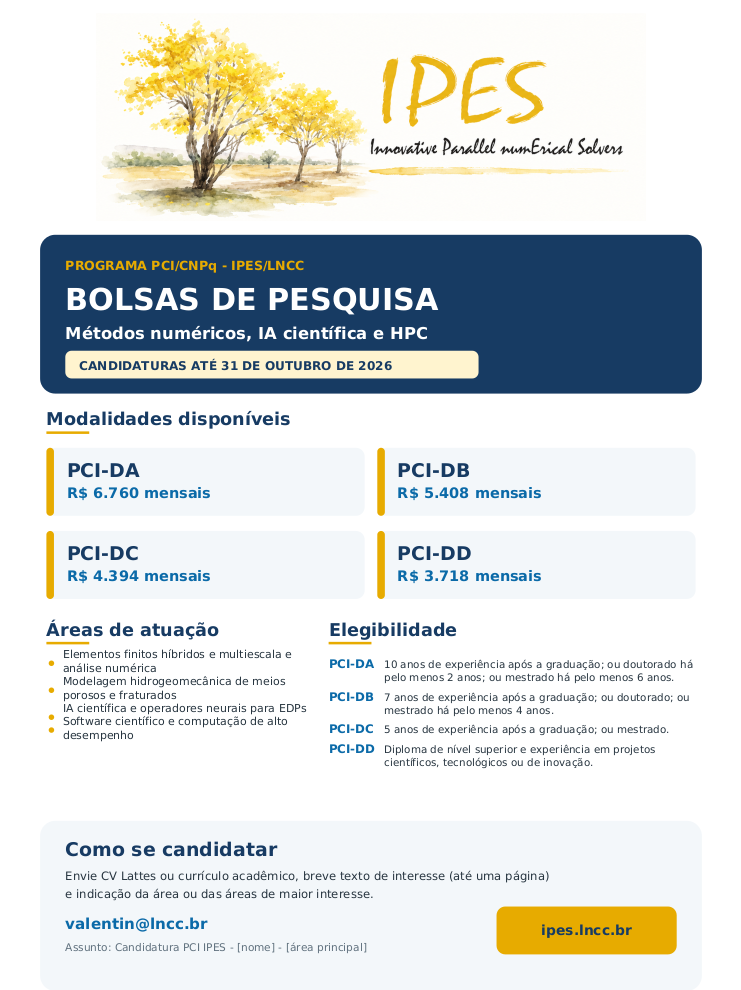
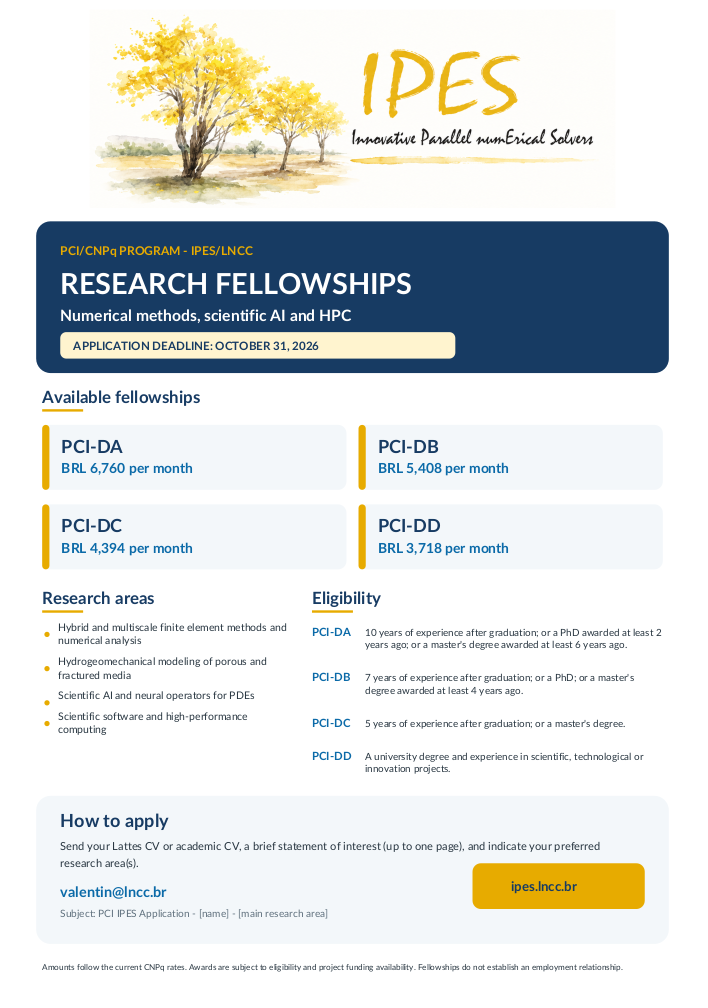
accepting expressions of interest for six research fellowships
under the Institutional Capacity Building Program (PCI/CNPq).
The fellowships are associated with the project “Multiscale Numerical Methods for Linear and Nonlinear
Hydro-Geomechanical Models: Development and Integration with AI.”
IPES conducts research in mathematical modeling, advanced numerical methods, and high-performance scientific computing
for problems governed by partial differential equations.
Research Areas
- Hybrid and multiscale finite element methods and numerical analysis;
- Multiphysics hydro-geomechanical modeling of porous and fractured media;
- Scientific AI and neural operators for partial differential equations;
- Scientific software and high-performance computing.
Candidate Profile
We are looking for researchers with a background in Mathematics, Applied Mathematics, Computational Modeling, Computer
Science, Engineering, or related fields, and with experience compatible with one of the fellowship categories.
Selected fellows will work on mathematical research, computational development, or applications in collaboration with the IPES team and its network of national
and international partners.
Location and Selection Process
Location: National Laboratory for Scientific Computing, Petrópolis, Rio de Janeiro, Brazil.
Selection process: CV review and interview. Applications will be evaluated on a rolling basis until all positions have been filled.
How to Apply
Deadline: 31st october
Email subject: PCI IPES Application – [name] – [main research area]
Applicants should send the following documents to valentin@lncc.br:
- A CV Lattes or academic CV;
- A brief statement of interest of no more than one page;
- An indication of the applicant’s main area or areas of interest.
The fellowship amounts follow the current CNPq funding table. Fellowship
implementation is subject to compliance with the applicable program
requirements. The fellowships do not establish an employment relationship
and are governed by the rules of the PCI/CNPq Program.
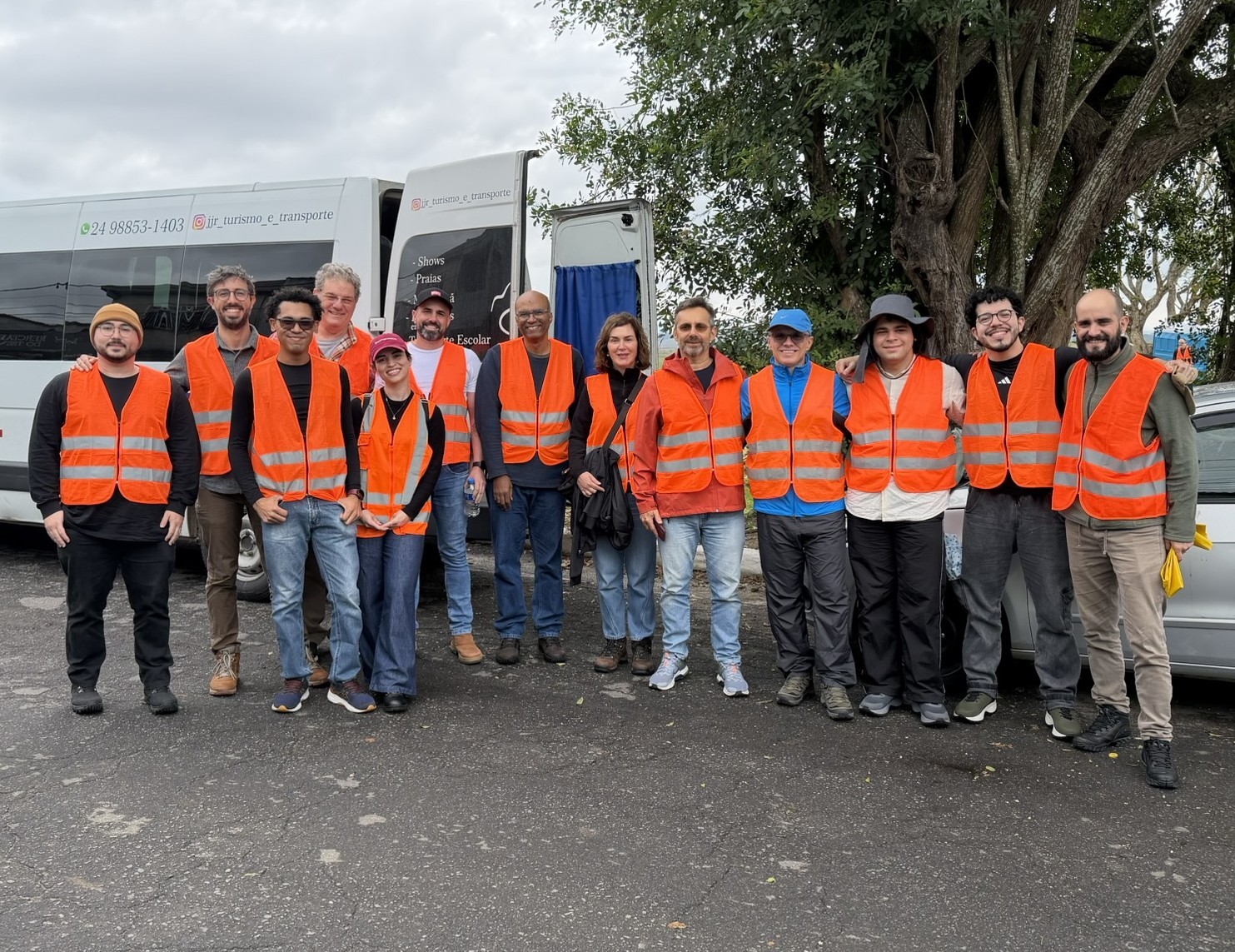
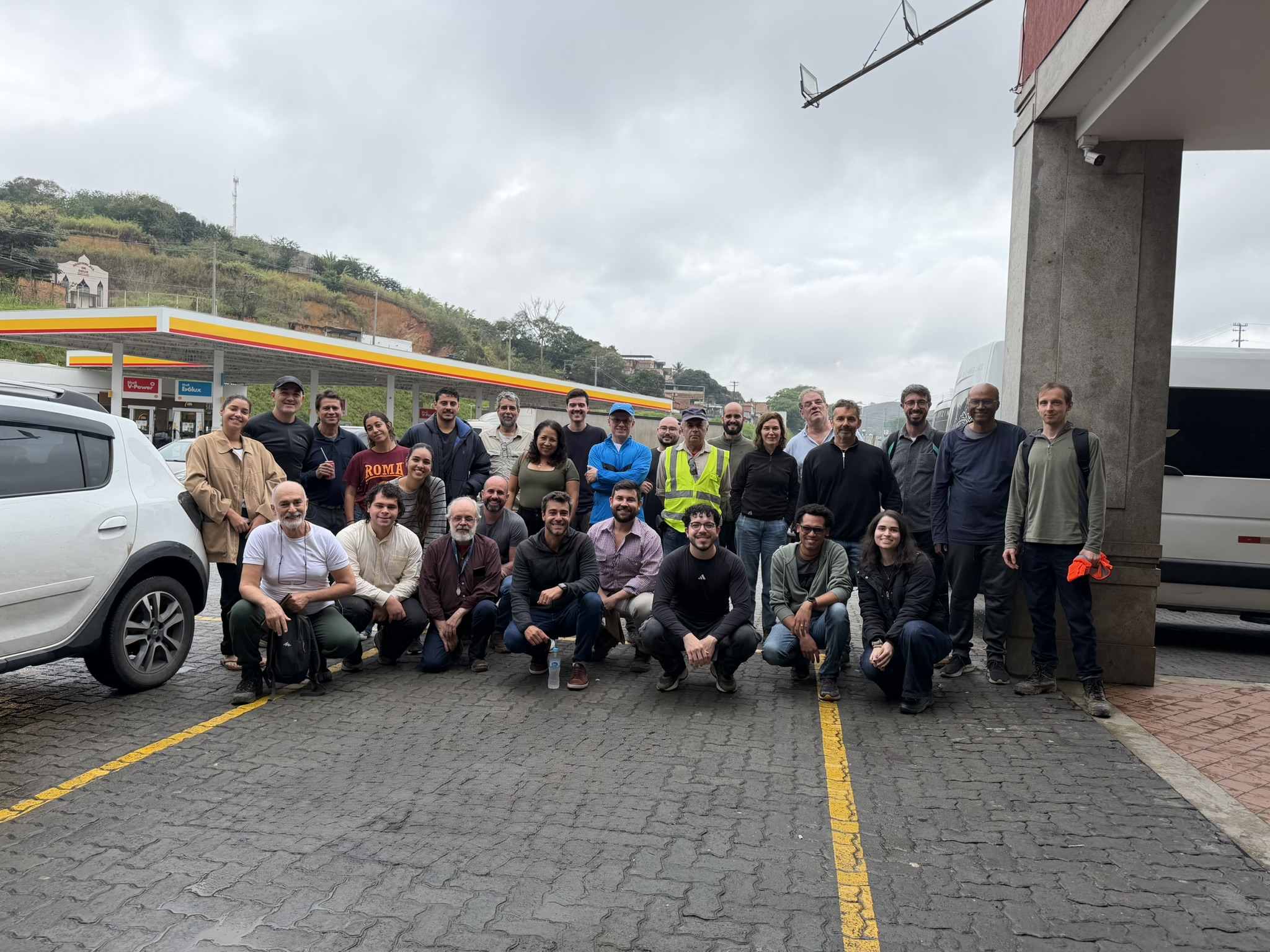
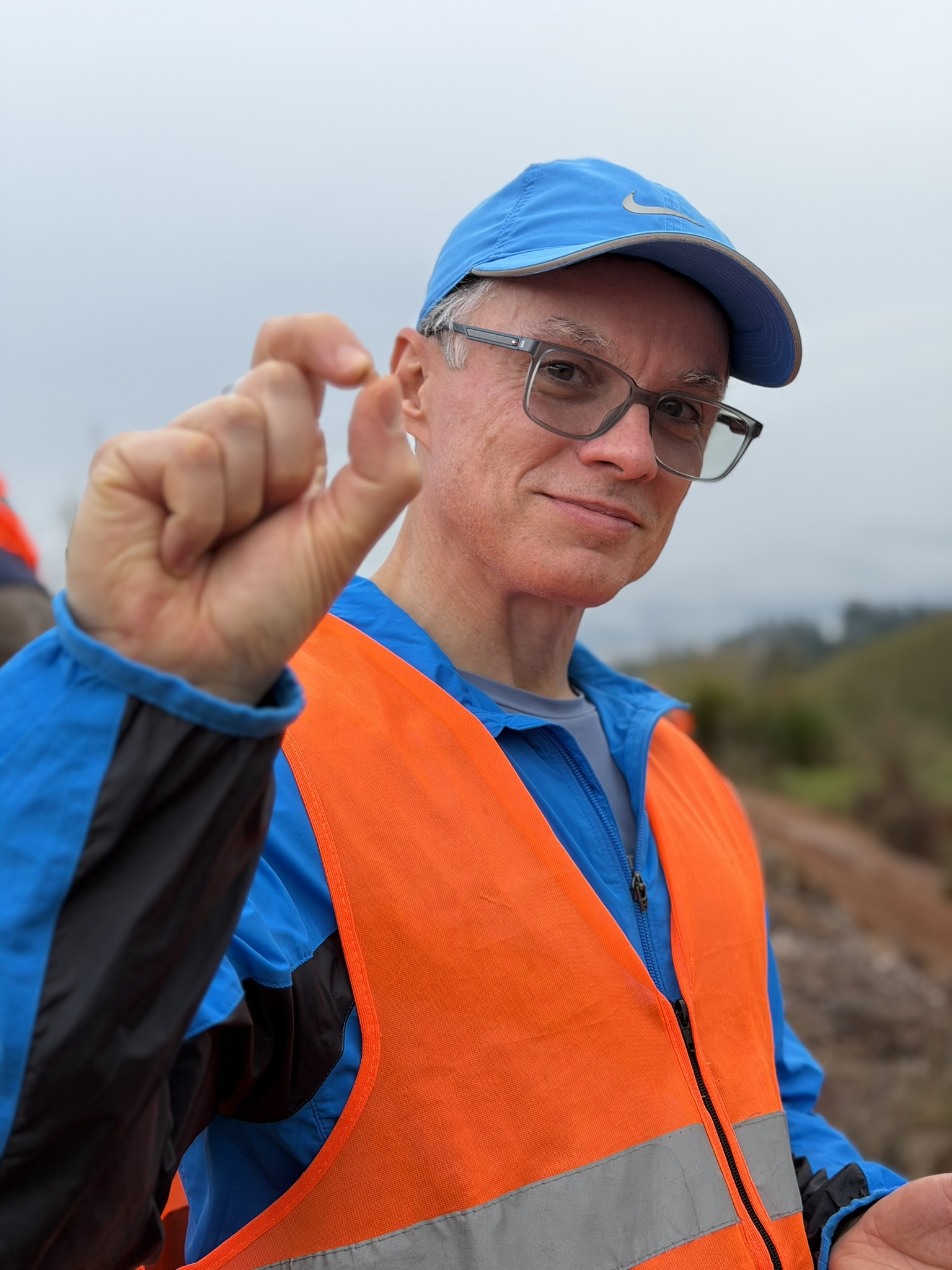
On September 9–10, 2026, our group participated in a geological field visit to the
Resende and Volta Redonda basins, located in the middle Paraíba do Sul
River valley in Rio de Janeiro State. The visit was conducted in connection with the
CAMCO2 project, in which our research group at LNCC
participates in collaboration with the Federal University of Rio de Janeiro
(UFRJ).
The Volta Redonda Basin is part of the central segment of the
Continental Rift of Southeastern Brazil (CRSB), an approximately
900-km-long Paleogene tectonic system extending from Paraná to Rio de Janeiro.
Together with the Resende, Taubaté, and São Paulo basins, it preserves an important
record of the tectonic, sedimentary, and volcanic processes associated with the
evolution of southeastern Brazil.
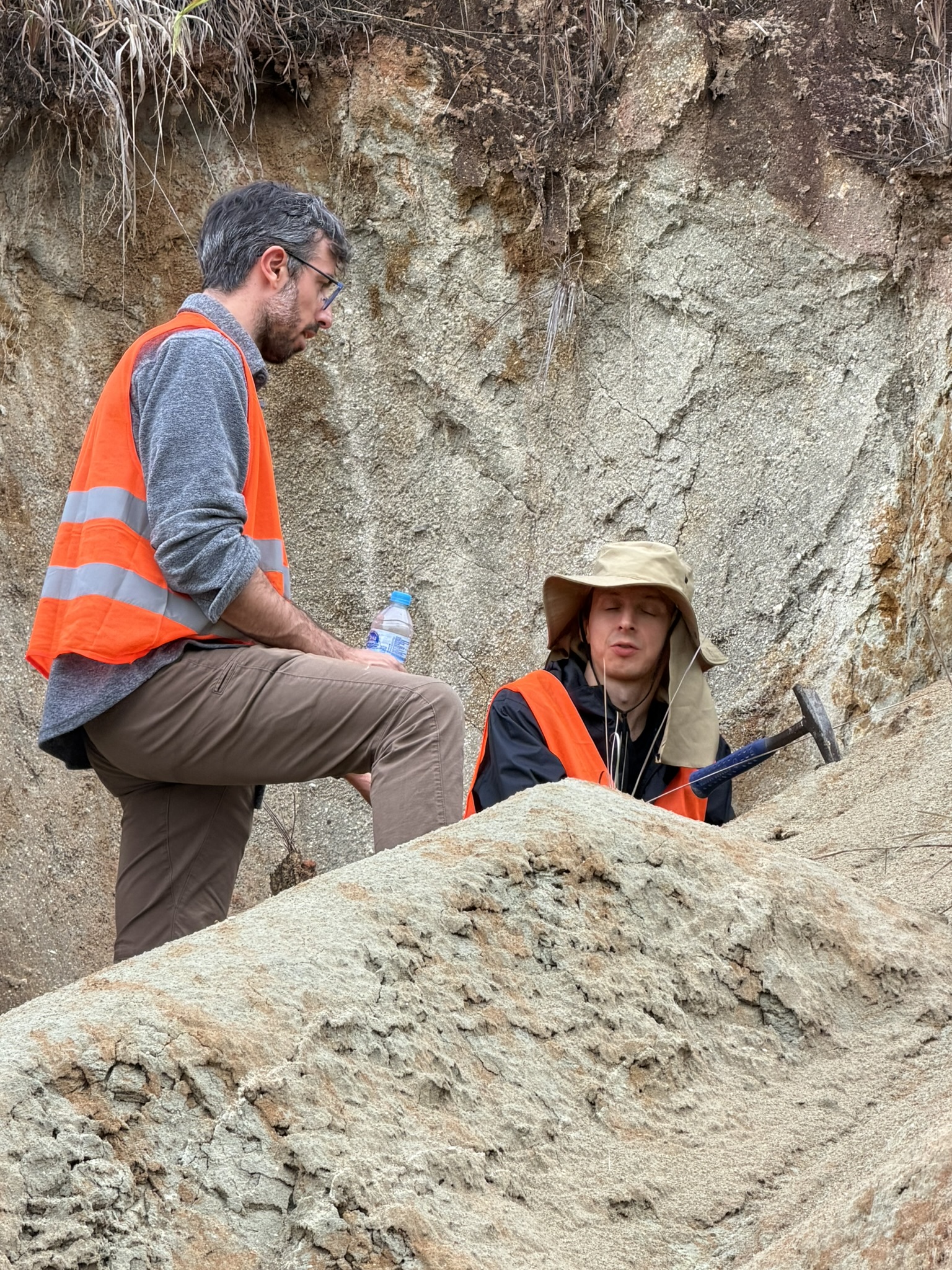
The field activities were carried out at an exposure along the
Rodovia do Contorno de Volta Redonda. The visit focused on the
recognition and interpretation of sedimentary facies and tectonic features preserved
in the basin. These observations provided an opportunity to discuss the relationship
between sediment deposition, fault activity, and the successive tectonic phases that
shaped the region.
The geological record of the basin includes deposits associated with fluvial and
alluvial systems, represented by units such as the Ribeirão dos Quatis, Resende,
Pinheiral, and Floriano formations. Another remarkable feature is the
Casa de Pedra Basanite, an alkaline ultramafic volcanic rock
interlayered with sediments of the Resende Formation and dated to approximately
50 million years ago.
By examining these rocks and structures directly in the field, participants were
able to connect regional geological models with the features observed in the
outcrop. The visit offered valuable insights into the tectonosedimentary evolution
of the Volta Redonda Basin and the broader geological history of the Continental
Rift of Southeastern Brazil.
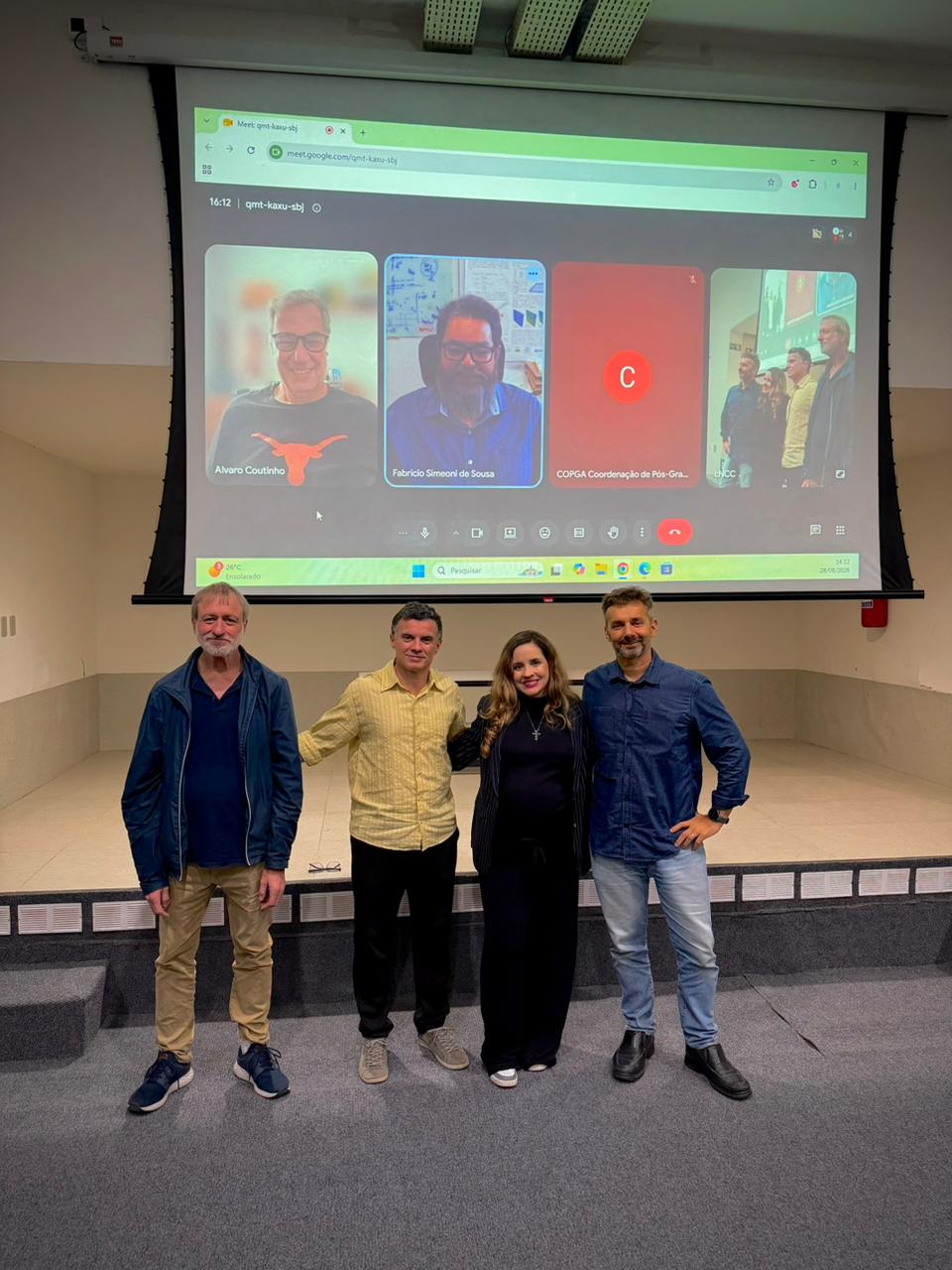
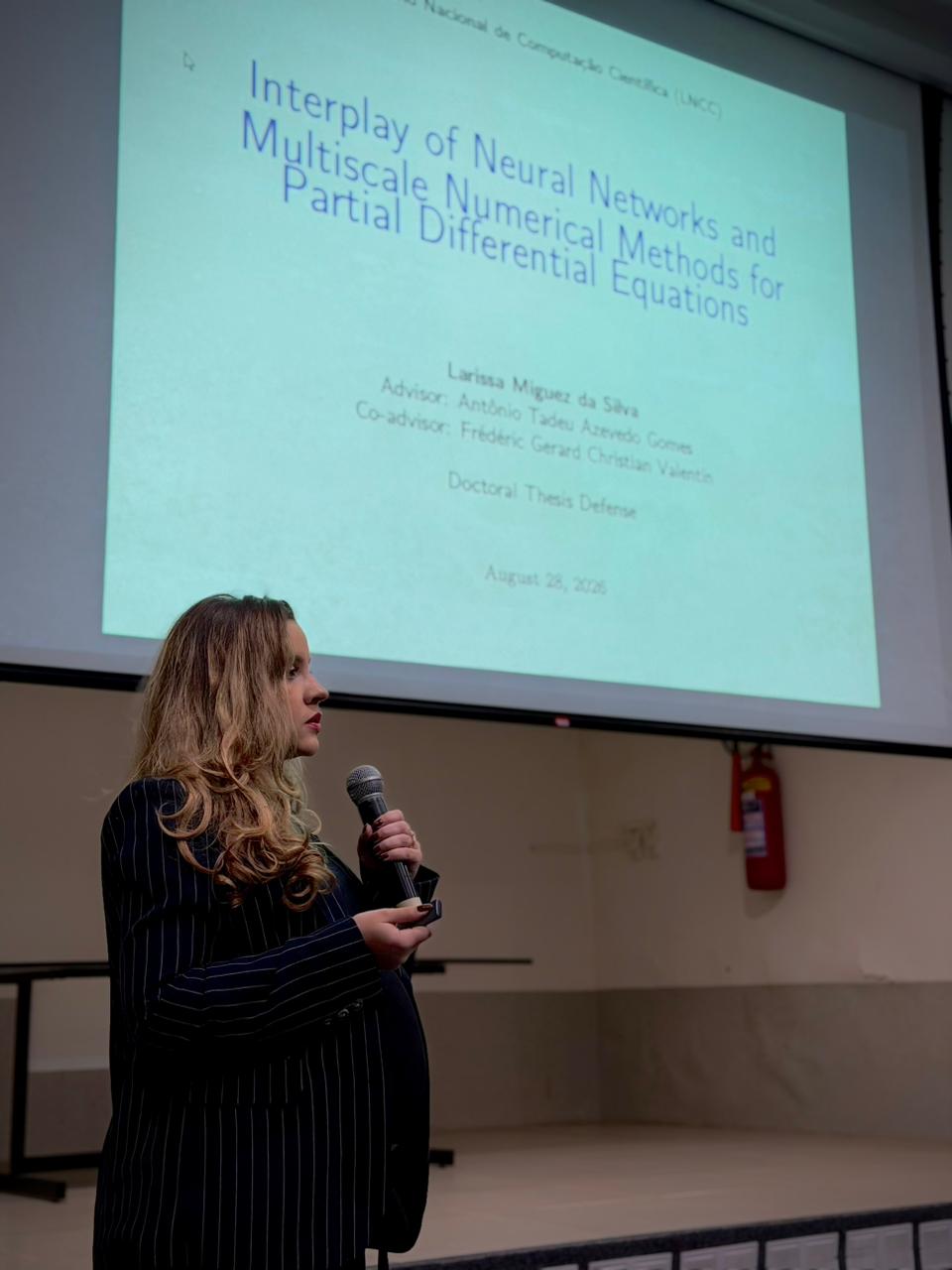
We are thrilled to announce the successful PhD thesis defense by Larissa
Miguez, titled “Interplay of Neural Networks and Multiscale Numerical
Methods for Partial Differential Equations.”
Solving partial differential equations (PDEs) with multiscale features, such as
boundary layers, localized oscillations, and heterogeneous media, remains a fundamental
computational bottleneck in scientific computing. Larissa’s research directly tackles this
challenge by bridging scientific machine learning with the novel Multiscale
Hybrid-Mixed (MHM) framework.
Her work introduces a two-fold approach to accelerating fine-scale physics approximations:
• Physics-Informed Neural Networks (PINNs): By approximating multiscale basis functions locally within subdomains, this approach retains classical MHM precision while keeping global error rigorously controlled.
• DeepONet-Based Operators: To eliminate the need for retraining when refining meshes, Larissa designed a neural operator formulation trained on a single reference element. This operator can be mapped across elements, recovering robust MHM convergence trends and dramatically simplifying complex learning tasks.
This research represents a significant leap forward for data-driven numerical methods within our group,
unlocking faster, more flexible simulations for multiscale physical phenomena. Congratulations, D.Sc. Larissa Miguez!
How can we solve increasingly complex mathematical problems without making computational simulations even heavier?
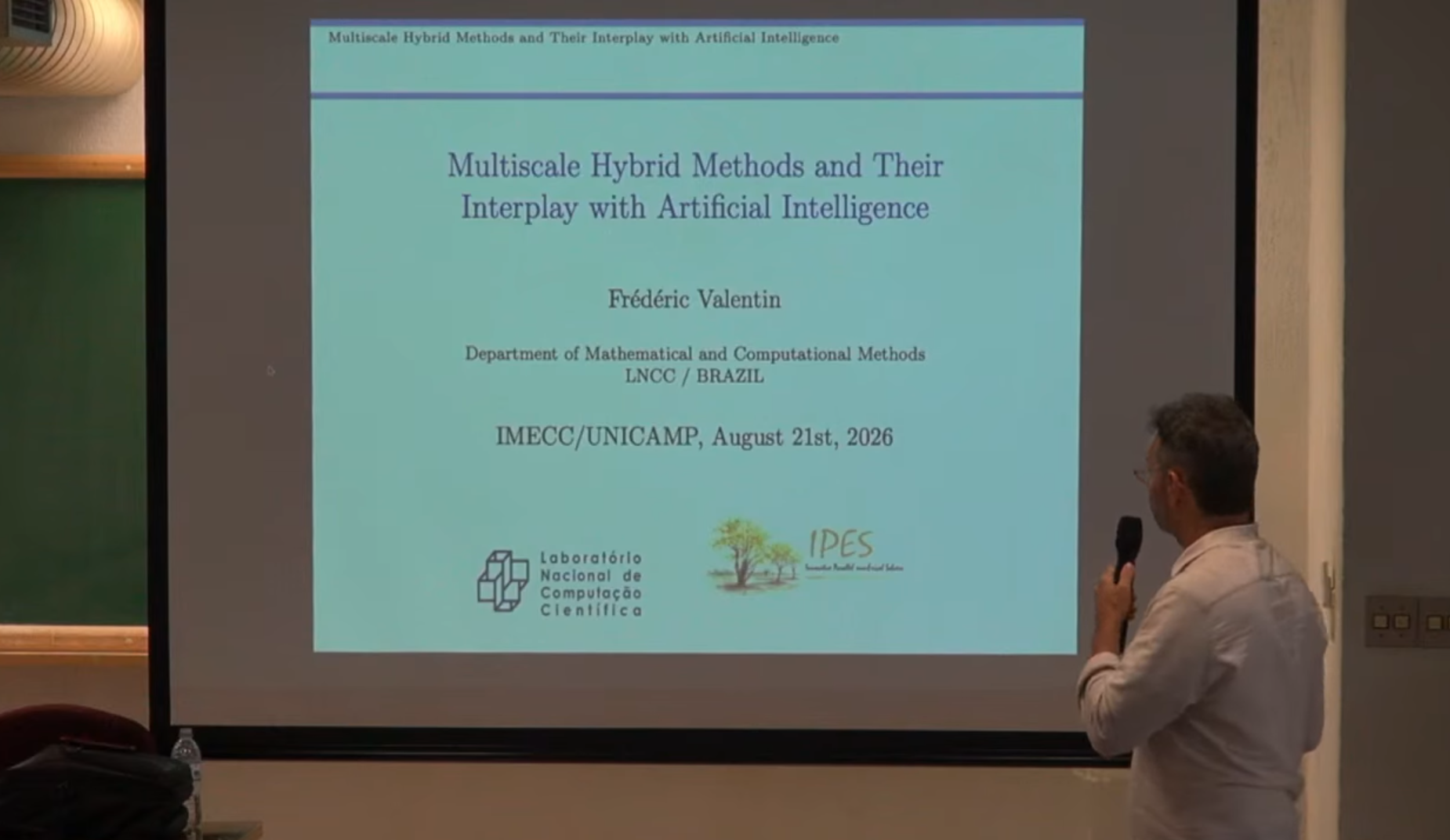
On August 21, researcher Frédéric Valentin, from the National Laboratory for Scientific Computing
(LNCC), presented the talk “Multiscale Numerical Methods and Their Interplay with Artificial
Intelligence” at the IMECC Colloquium.
The presentation began with a brief retrospective of the Multiscale Hybrid-Mixed (MHM) method
and its recent developments, including dual variable reconstruction techniques and robust a posteriori error
estimators. Subsequently, a new variant—the Multiscale Hybrid-Hybrid Method (MH²M)—was introduced,
illustrated using an elliptic problem with irregular coefficients.
In the final part, the talk focused on the interaction between multiscale numerical methods and
Artificial Intelligence. Valentin discussed how tools such as Physics-Informed Neural Networks (PINNs)
and neural operators like DeepONet can be integrated into the multiscale framework to approximate or
parameterize local problems and basis functions. Combining these approaches can significantly reduce computational
cost while preserving the mathematical and physical structure of the models.
Watch the full recording of the presentation on YouTube: IMECC Colloquium - Frédéric Valentin

Members of the IPES Research Group participated in the
9th Brazil InterPore Chapter Meeting, held from August 10 to 13,
2026, at the Brazilian Center for Physics Research (CBPF) in Rio de Janeiro.
The conference brought together researchers from different scientific fields to
discuss recent advances in porous media research, including mathematical and
computational modeling, energy applications, and carbon capture and storage.
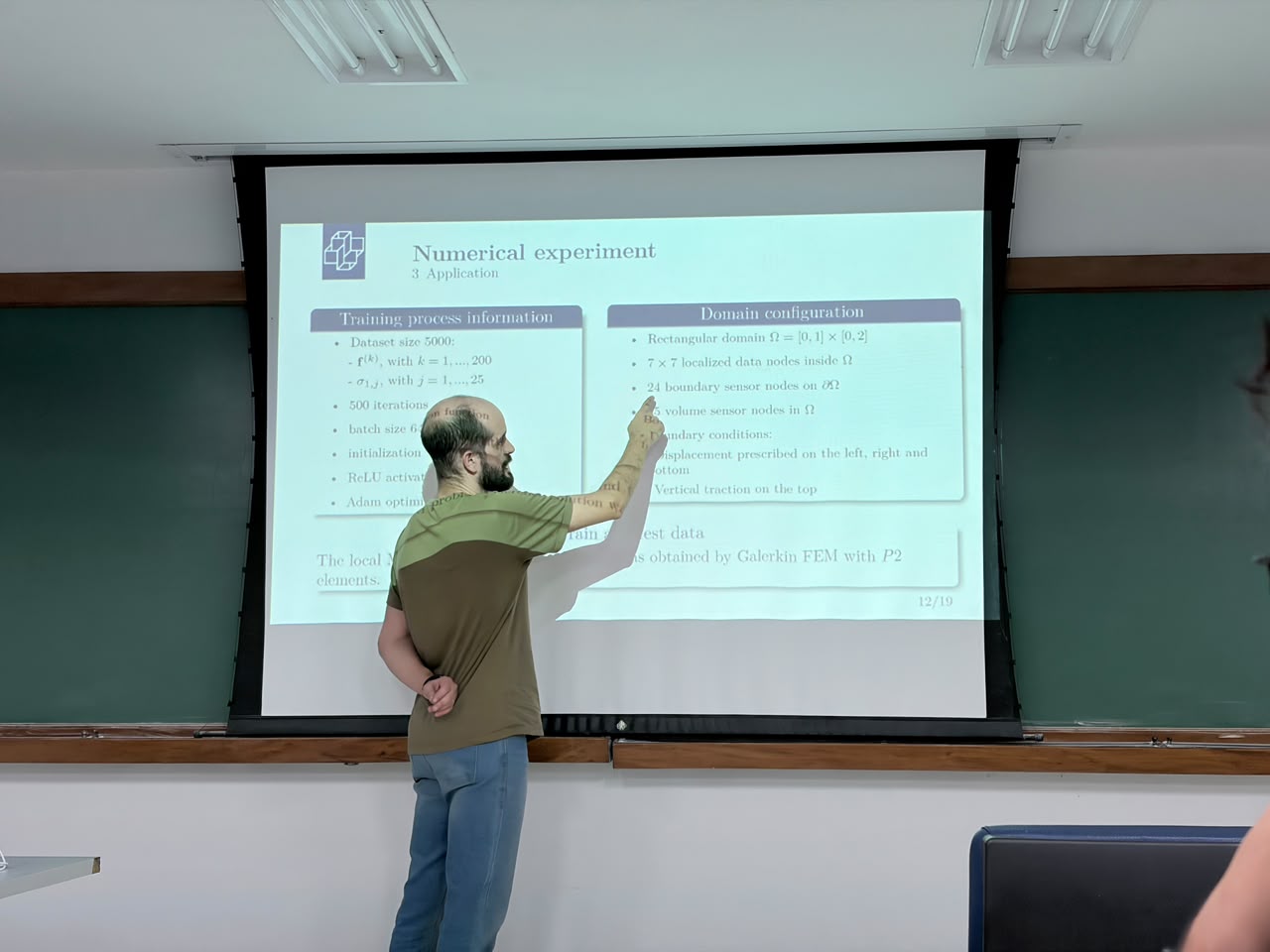
During the event, Leonardo Mello presented the work entitled
“DeepONet-Based Stress Path Prediction Using a Multiscale Finite Element
Method.”
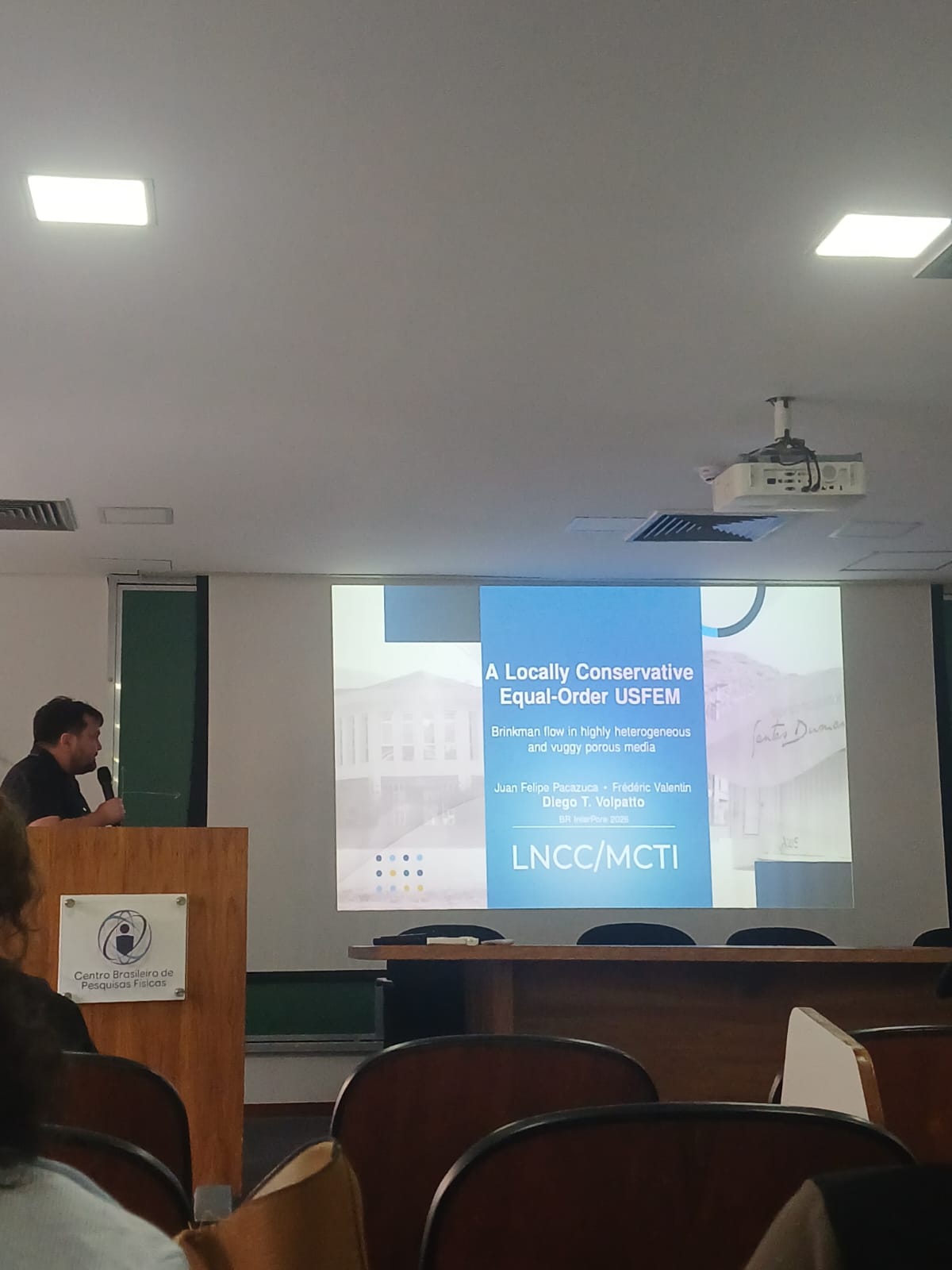
Diego Volpatto presented the work entitled
“A Locally Conservative Equal-Order Stabilized Mixed Finite Element Method
for the Brinkman Problem in Highly Heterogeneous Porous Media.”
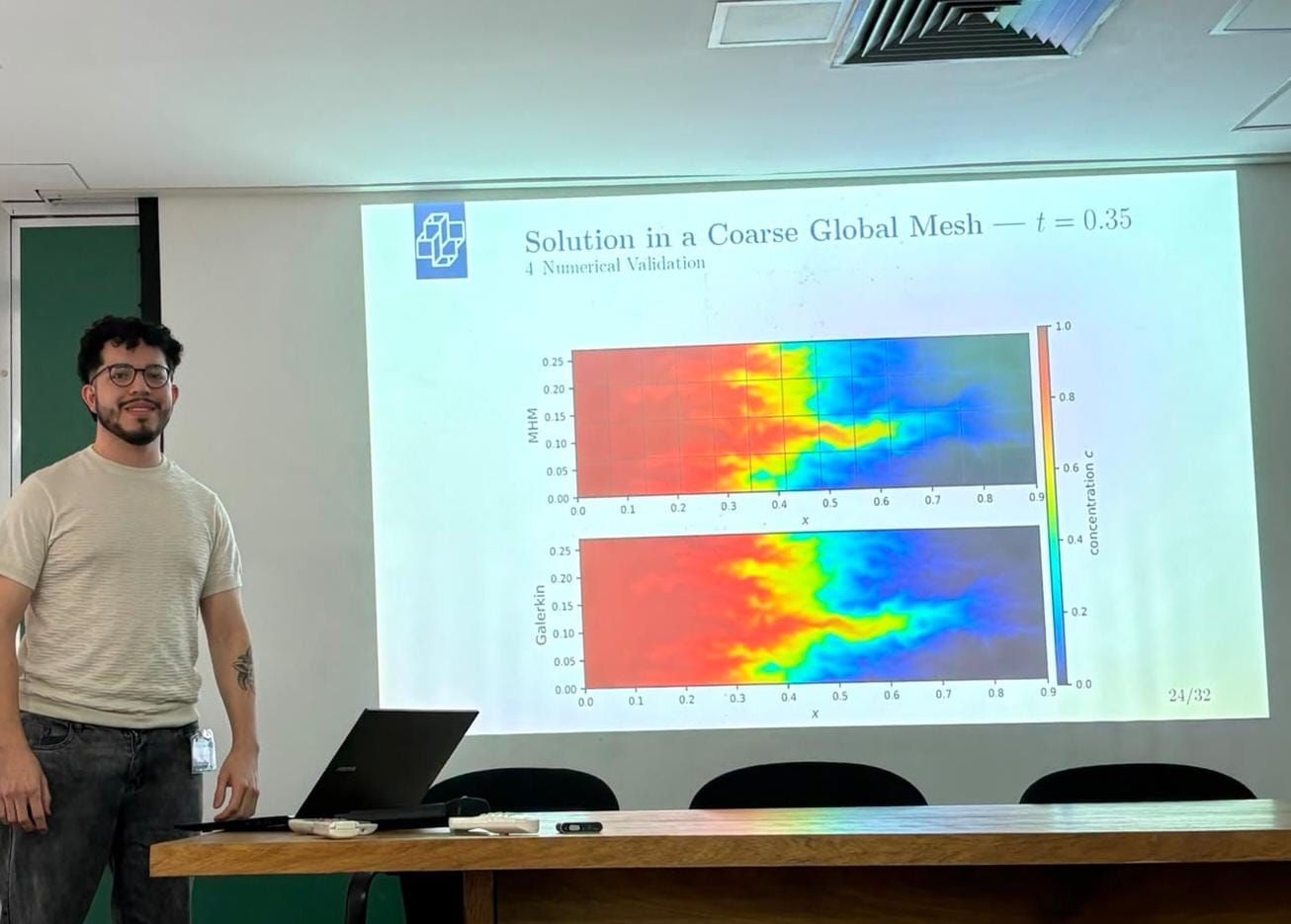
Juan Pacazuca presented the work entitled
“Stabilized Multiscale Hybrid-Mixed Methods for
Reaction-Advection-Dominated Models.”
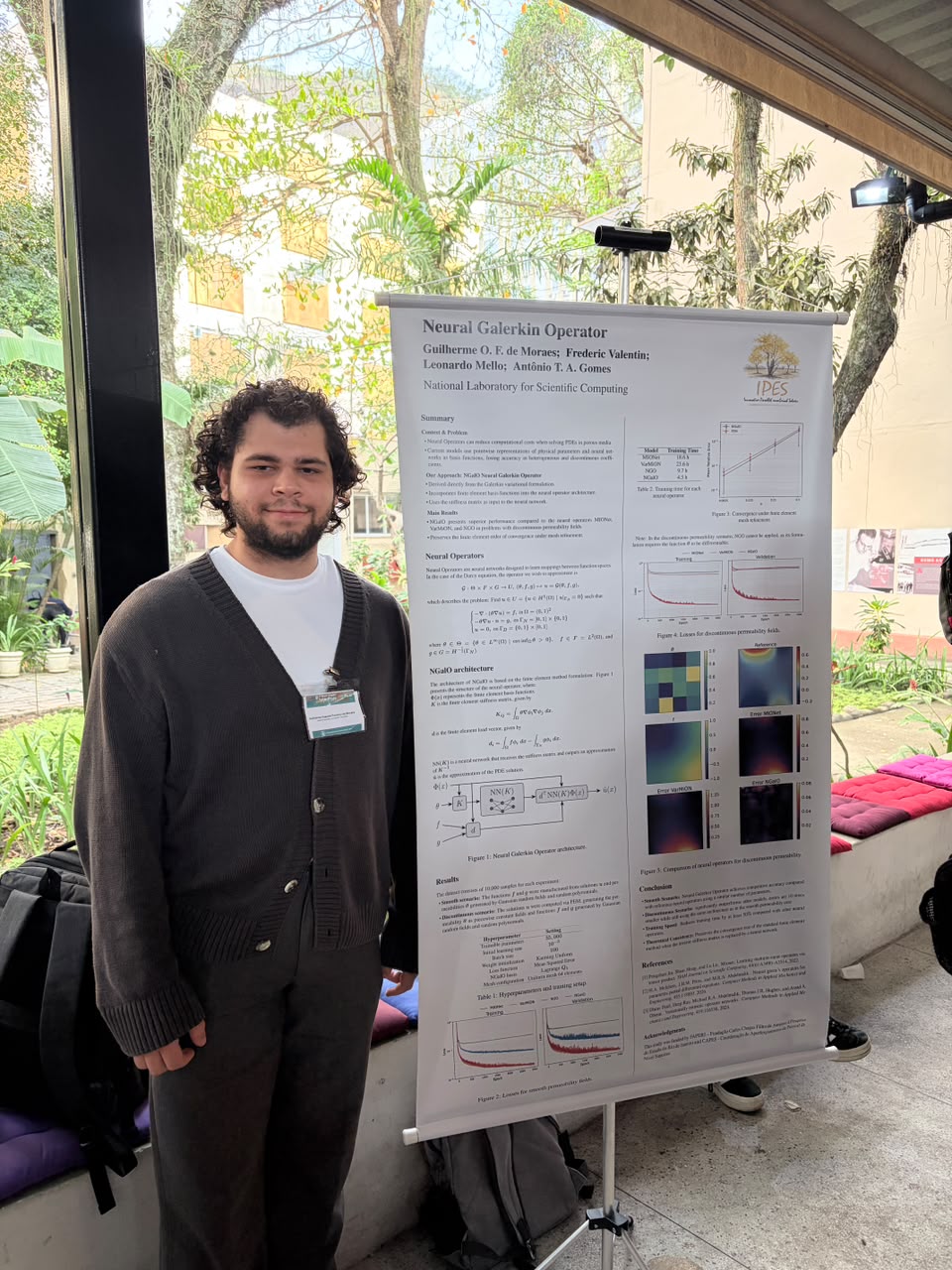
Guilherme Osanski presented the work entitled
“Neural Galerkin Operator.”
Their participation provided an excellent opportunity to share the group’s latest
research, exchange ideas with the porous media community, and strengthen scientific
collaborations.
Last month, researchers associated with our group participated in the 17th World Congress on Computational
Mechanics (WCCM) and the 10th European Congress on Computational Methods in Applied Sciences and Engineering
(ECCOMAS), held in Munich, Germany.
WCCM-ECCOMAS 2026 brought together researchers and professionals from academia, government, and industry worldwide.
As one of the largest international events in the field, the congress provided a forum for discussing recent
advances in computational mechanics and computational methods in applied sciences and engineering.
During the event, Frédéric Valentin presented the work entitled “H(div, Ω)-Conforming MHM Methods for Elasticity
with Weak and Strong Symmetry,” co-authored by Gabriel R. Barrenechea, Josué Barroso, Larissa Martins, Weslley
Pereira, and Frédéric Valentin. The study addresses H(div, Ω)-conforming formulations for the Multiscale
Hybrid-Mixed (MHM) method, considering stress tensor reconstructions with both weak and strong symmetry.
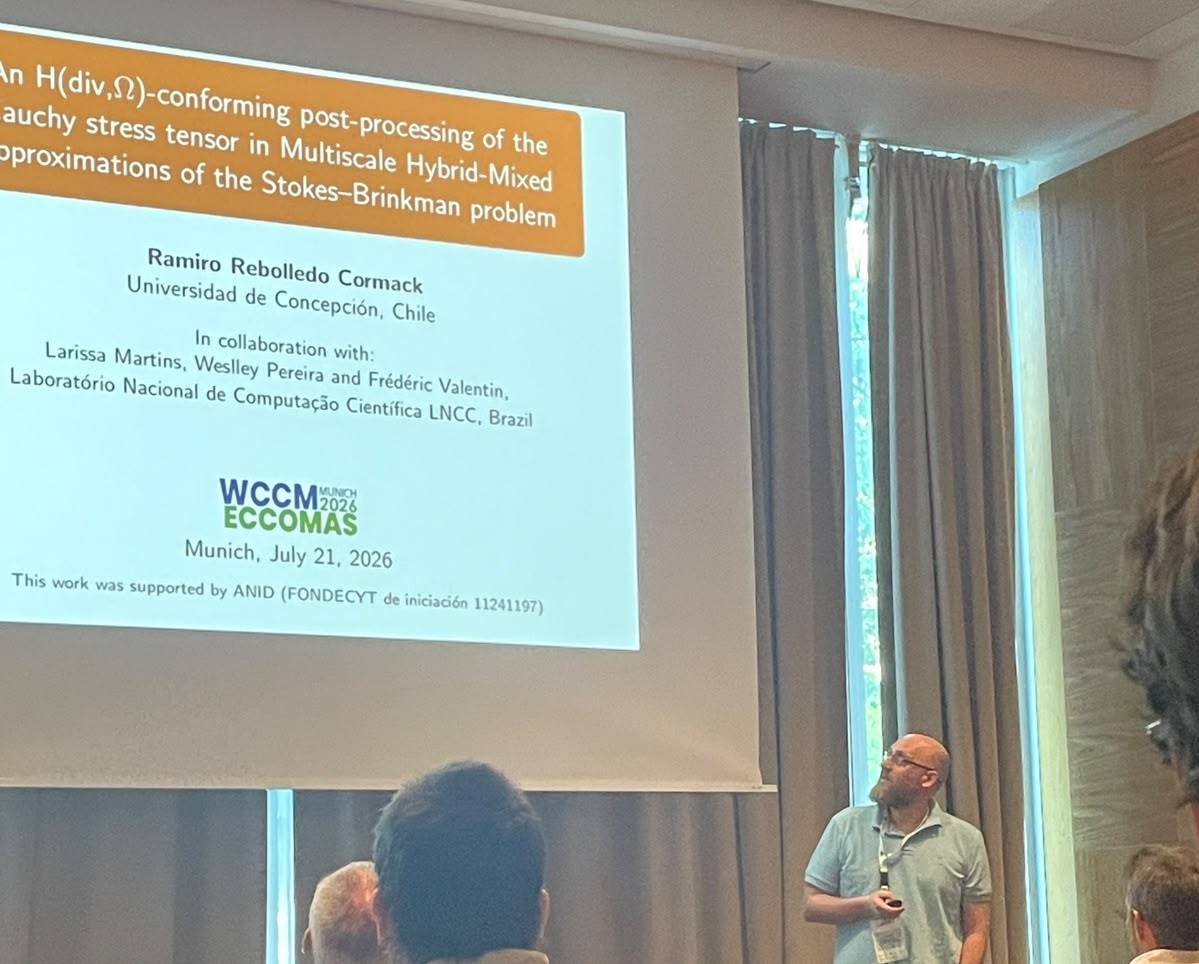
Ramiro Rebolledo, from Universidad de Concepción, presented the work entitled “An H(div, Ω)-Conforming
Post-Processing of the Cauchy Stress Tensor in Multiscale Hybrid-Mixed Approximations of the Stokes-Brinkman
Problem.” The study was developed in collaboration with Larissa Martins, Juan F. Pacazuca, Weslley Pereira,
and Frédéric Valentin from the National Laboratory for Scientific Computing (LNCC). It proposes an
H(div, Ω)-conforming post-processing technique for reconstructing the Cauchy stress tensor in MHM approximations
of the Stokes–Brinkman problem.
Participation in the congress provided an important opportunity to disseminate the group's research results,
exchange knowledge with international experts, and strengthen scientific collaborations in numerical methods and
computational modeling.
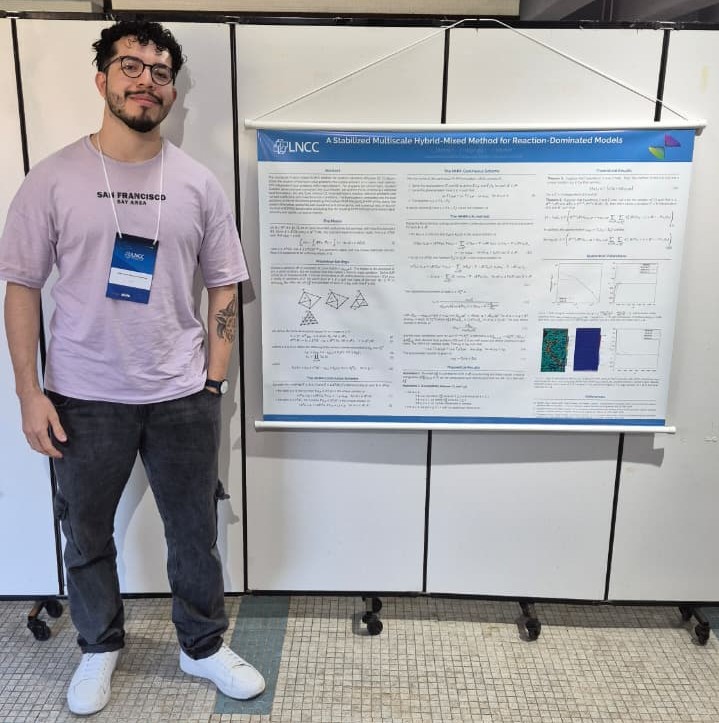
The poster “A Stabilized Multiscale Hybrid-Mixed Method for Reaction-Dominated Models” was
presented by PhD student Juan Pacazuca at the Inria-Brasil (hybrid) Workshop on HPC, held at LNCC,
Petrópolis, Brazil, on April 15–16, 2026. The event brought together French and Brazilian researchers
to foster collaboration in high-performance computing, artificial intelligence, scientific computing,
and data science. The work highlights ongoing research on advanced numerical methods for challenging
multiscale problems.
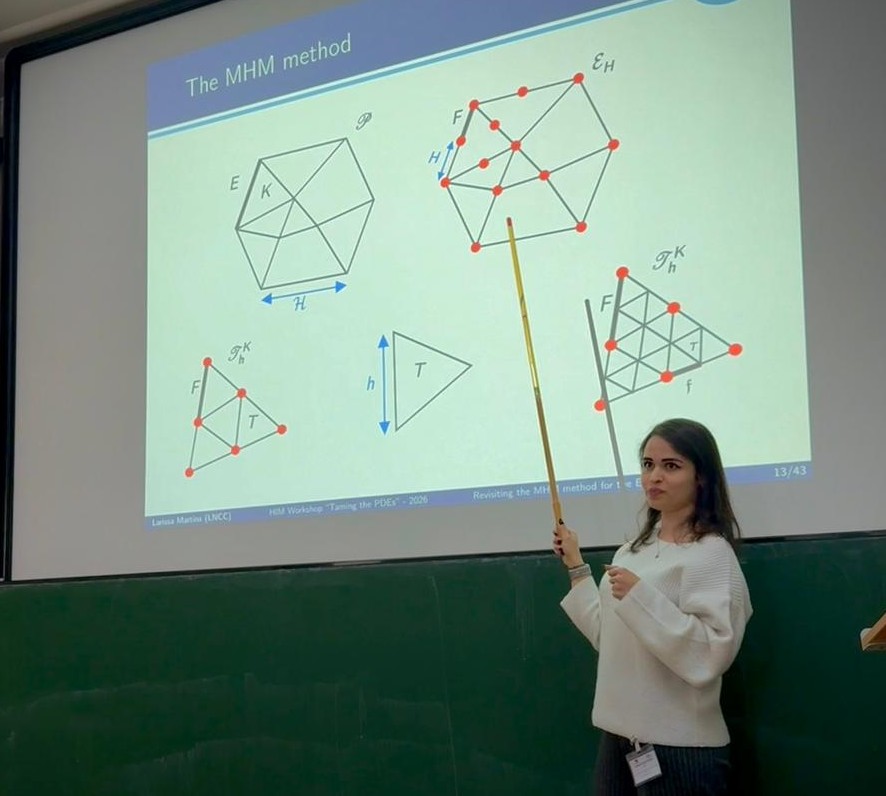
During the workshop “Taming the PDEs: Tailored Methods, Multiscale Approaches,
and Real-World Application”, held on March 9–13, 2026 as part of the Junior Trimester
Program at the Hausdorff Research Institute for Mathematics in Bonn, Larissa Martins
presented the talk “H(div, Ω)-Conforming Multiscale Hybrid-Mixed Methods for
Elasticity with Weak and Strong Symmetry.” The presentation introduced new
elementwise reconstruction strategies within the Multiscale Hybrid-Mixed (MHM)
framework for linear elasticity that produce H(div; Ω)-conforming stress tensors
while enforcing either weak or strong symmetry. The proposed approach restores local
conservation and improves the quality of stress approximations obtained from continuous
Galerkin local solvers. Theoretical analysis proves optimal convergence of the
reconstructed stress in the H(div; Ω)-norm, while numerical experiments demonstrate
the robustness and effectiveness of the method in multilayer elasticity problems
relevant to real-world applications such as faulted subsurface reservoirs.
🎥 Presentation recording: https://youtu.be/noJqq1eotX4
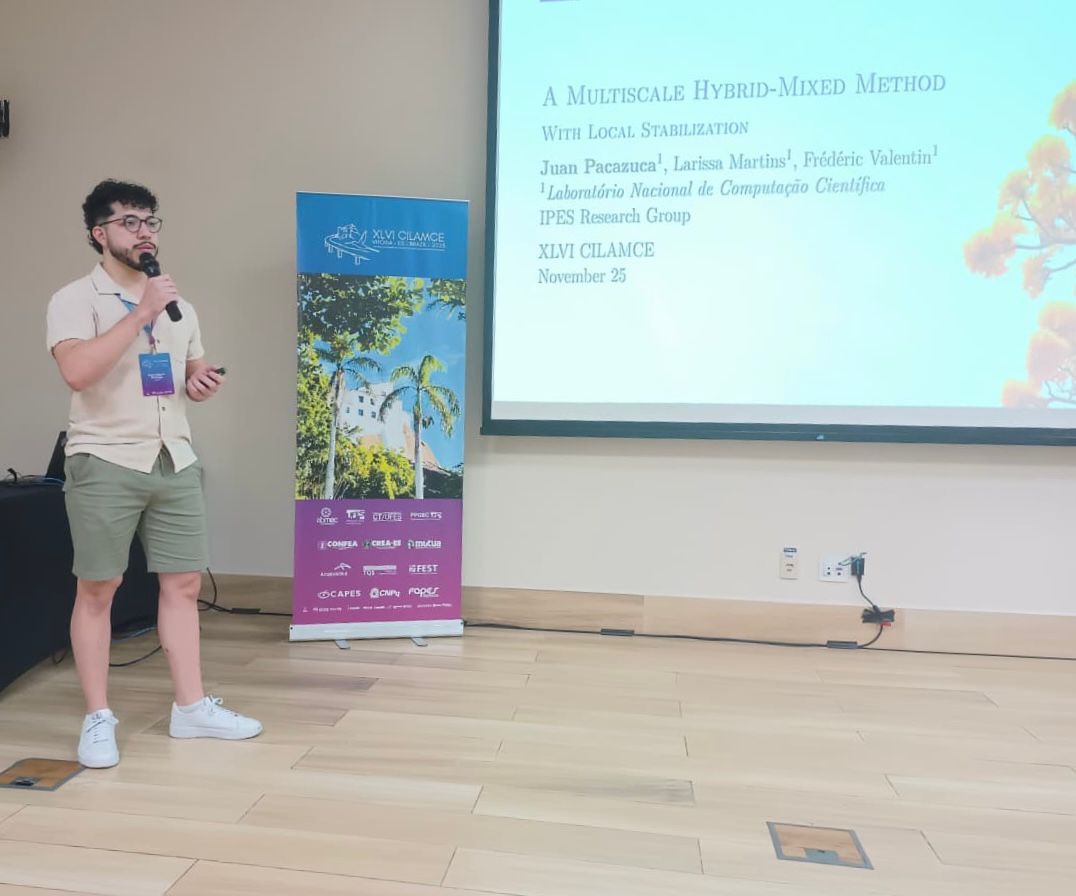
At the XLVI Ibero-Latin American Congress on Computational Methods in Engineering (CILAMCE 2025),
Juan Felipe Pacazuca Santiago presented the work “A Multiscale Hybrid-Mixed Method with Local Stabilization.”
The talk introduced the MHM-UNUSUAL method, a new approach that combines the Multiscale Hybrid-Mixed (MHM)
framework with the Unusual Stabilized Finite Element Method (UNUSUAL). The proposed strategy improves
the approximation of multiscale basis functions in challenging scenarios, such as reaction-dominated and
highly heterogeneous problems. By incorporating stabilization terms in the local problems, the method
mitigates spurious oscillations and allows the use of coarser local meshes, reducing computational cost
while maintaining accuracy. Numerical experiments on boundary layer problems and the SPE-10 benchmark demonstrate
the potential of the approach for efficient and reliable multiscale simulations.
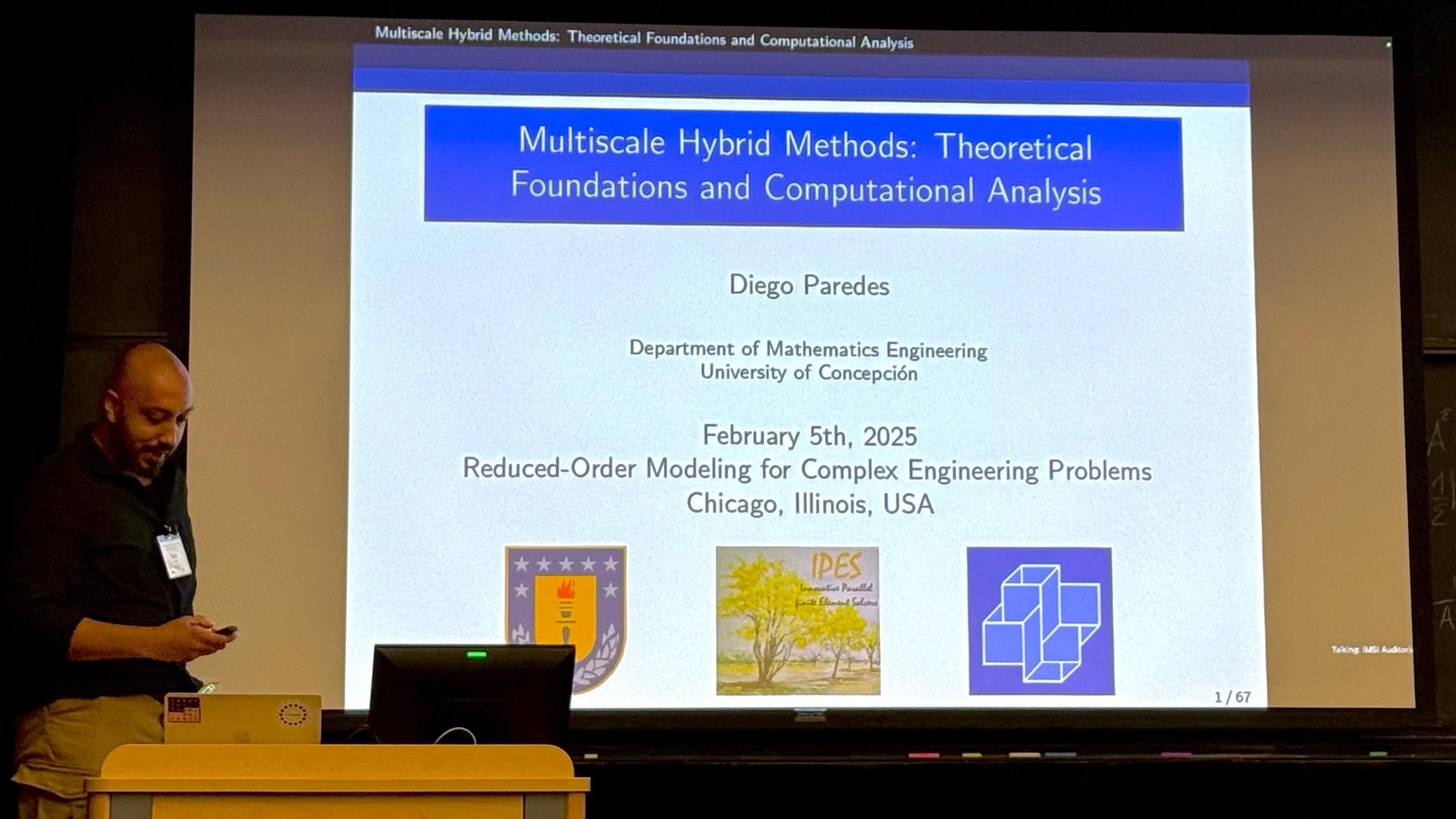
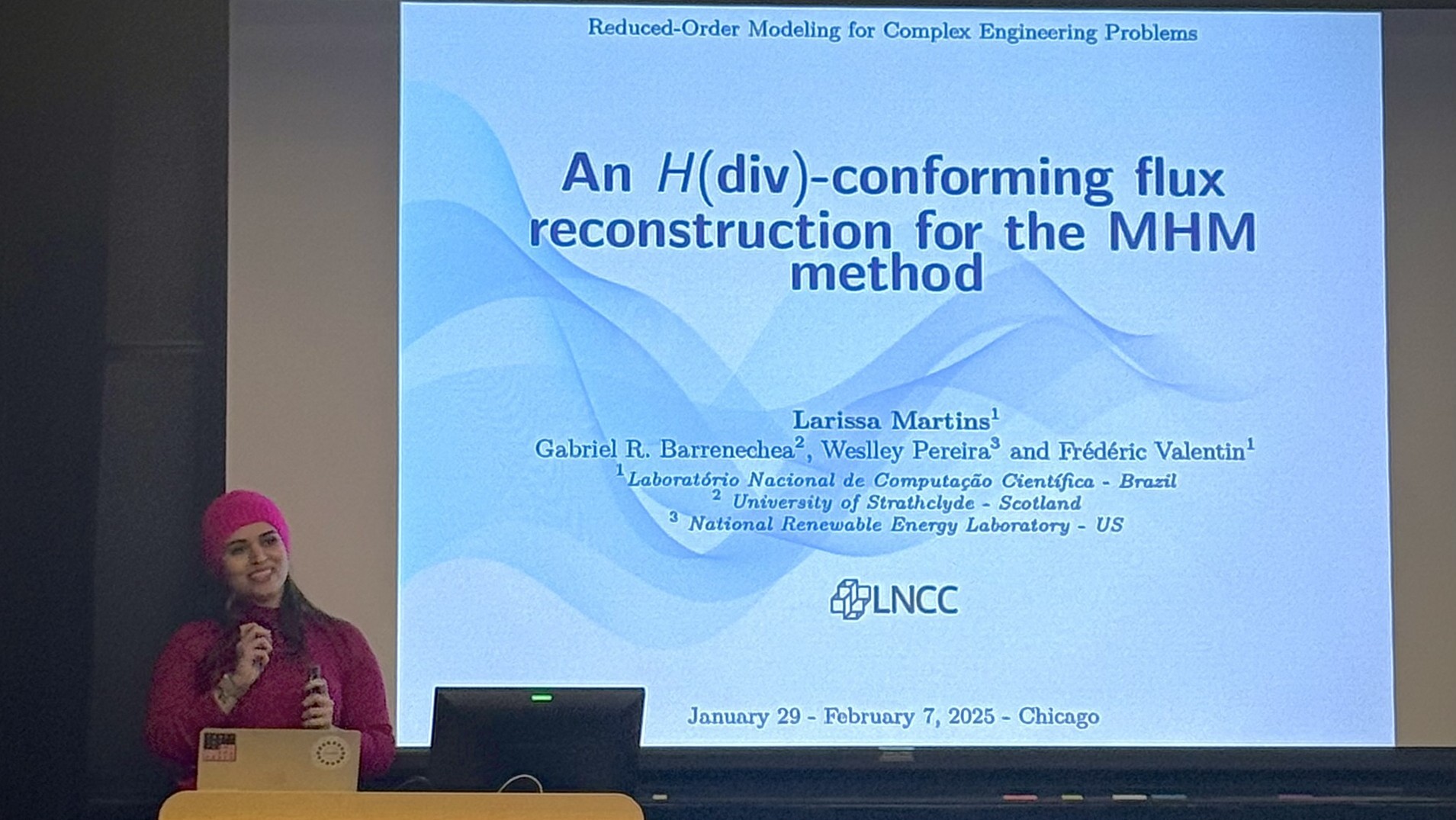
Larissa Martins and Diego Paredes presented recent advances on Multiscale
Hybrid-Mixed (MHM) methods at the workshop Reduced-Order Modeling for Complex
Engineering Problems: From Analysis to Practical Implementation, held from January 29
to February 7, 2025, at the Institute for Mathematical and Statistical Innovation (IMSI), in Chicago, USA.
The event focused on numerical simulation of engineering problems in complex and
heterogeneous media, highlighting multiscale methods, reduced-order modeling,
and practical implementation in industrial contexts.
Diego Paredes (Universidad de Concepción) delivered the talk "Multiscale
Hybrid Methods: Theoretical Foundations and Computational Analysis". In a
lightning talk, Larissa Martins presented "An H(div, Ω)-conforming flux
reconstruction for the MHM method".
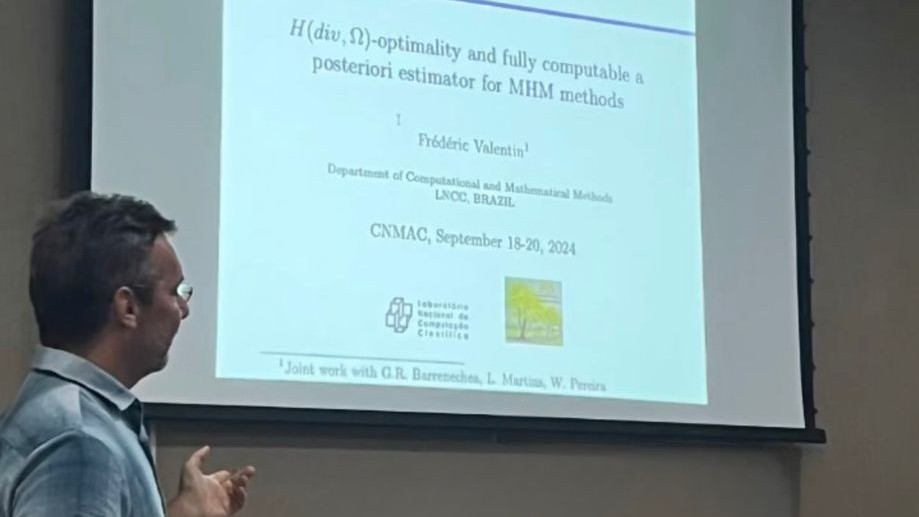
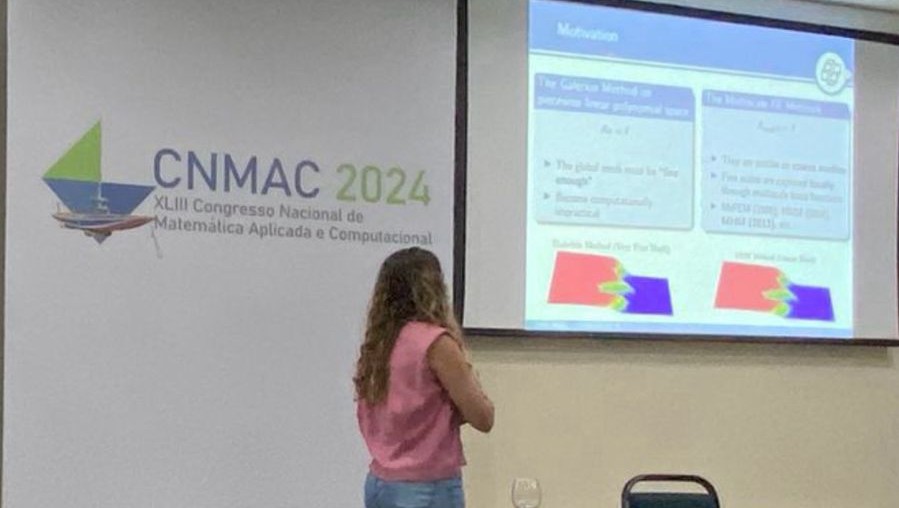
Members of the IPES Research Group participated in CNMAC 2024,
held on September 19–20 in Porto de Galinhas, Brazil, presenting
recent developments in multiscale numerical methods and
scientific machine learning. During the mini-symposium
“New Challenges in the Numerical Simulation of Partial
Differential Equations” (MS08), Frédéric Valentin presented
recent advances in the Multiscale Hybrid-Mixed (MHM) method.
The talk focused on a local post-processing strategy for
recovering optimal convergence of the dual variable in
H(div, Ω), as well as a fully computable a posteriori error
estimator based on equilibrated flux techniques.
Larissa Miguez presented the talk “Interplay of
Physics-Informed Neural Networks and Multiscale Numerical
Methods,” which explored the integration of Physics-Informed
Neural Networks (PINNs) with the MHM framework. In the proposed
approach, PINN models are used to approximate the multiscale
basis functions arising from the independent local problems of
the method. Numerical experiments for the Poisson problem
demonstrated the potential of this strategy as a surrogate
approach for efficiently capturing multiscale features in
partial differential equation simulations.
The participation of the group in CNMAC 2024 provided an
important opportunity to disseminate complementary research
results and discuss the interplay between multiscale finite
element methods, post-processing techniques, error estimation,
and machine learning.